









Why LogicNets
AI is transforming how clinical knowledge is accessed and applied — but without structure or accountability, it’s just probabilistic. LogicNets provides the deterministic foundation that changes that, turning peer-reviewed clinical knowledge into consistent, measurable, governed guidance that makes AI safe and effective at the point of care.

Clinical knowledge transformed from PDFs into visually rendered and digitally structured step-by-step decision logic. Consistent across specialties, care teams, and use cases, reducing unwarranted variation in care.

Guidance delivered interactively within EHR/EMR workflows using prevalent standards like FHIR and CDS Hooks. Bidirectional data exchange, automated documentation, and downstream workflow automation, at the moment care is needed.

LogicNets serves as the system of record for clinical decision logic. Subject matter experts retain accountability while AI enhances usability: transparent, auditable, and repeatable at every step.
Filling Gaps in the Workflow
Your clinical guidance—once captured and managed in LogicNets—becomes an all-purpose foundation for a wide range of high-value clinical and operational applications.
One platform. One unified digital format. Every clinical and operational workflow powered from a single LogicNets-managed source of truth.
How It Works
Discover the LogicNets decision support platform, where you can visually diagram your decision processes and create the full range of actionable point-of-care applications. Craft and publish clinical guidance pathways, apply your knowledge to solve real clinical workflow problems, then measure results with powerful reporting features.
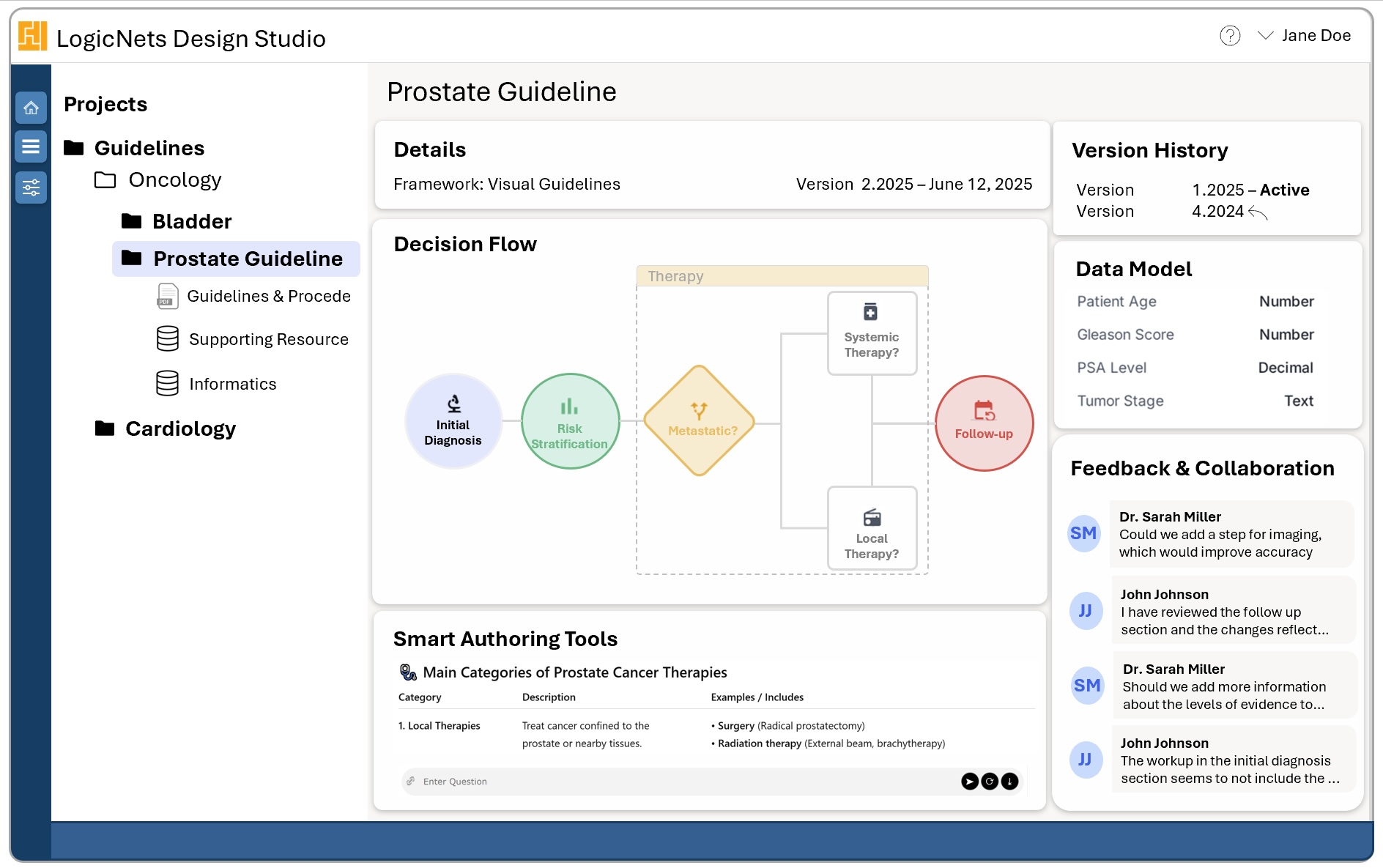
Decision applications start as projects you create and edit in your LogicNets Designer. Clinical experts use the visual design environment to graphically render guidelines and protocols as structured digital decision pathways, without programming and leveraging the game-changing productivity accelerators of AI. The platform accommodates even the most sophisticated conditional logic, contextual content management, and informatics mapping. Authoring is collaborative, with centralized governance, peer-review, and validation workflows built in. Furthermore, LogicNets professional services and partners can supplement and support content transformation as needed.
LogicNets use-case frameworks provide powerful packaging options that define how your applications behave—what users see, how they interact, and what actions they can take. Frameworks come pre-configured to support common clinical use cases, providing a strong starting point for application design. They are also highly configurable, allowing the user experience to be precisely tailored to specific roles and requirements. Because they are flexible and responsive to how clinical knowledge is modeled, you can control exactly how and when information is collected, processed, and presented—ensuring that guidance aligns seamlessly with real-world workflows.
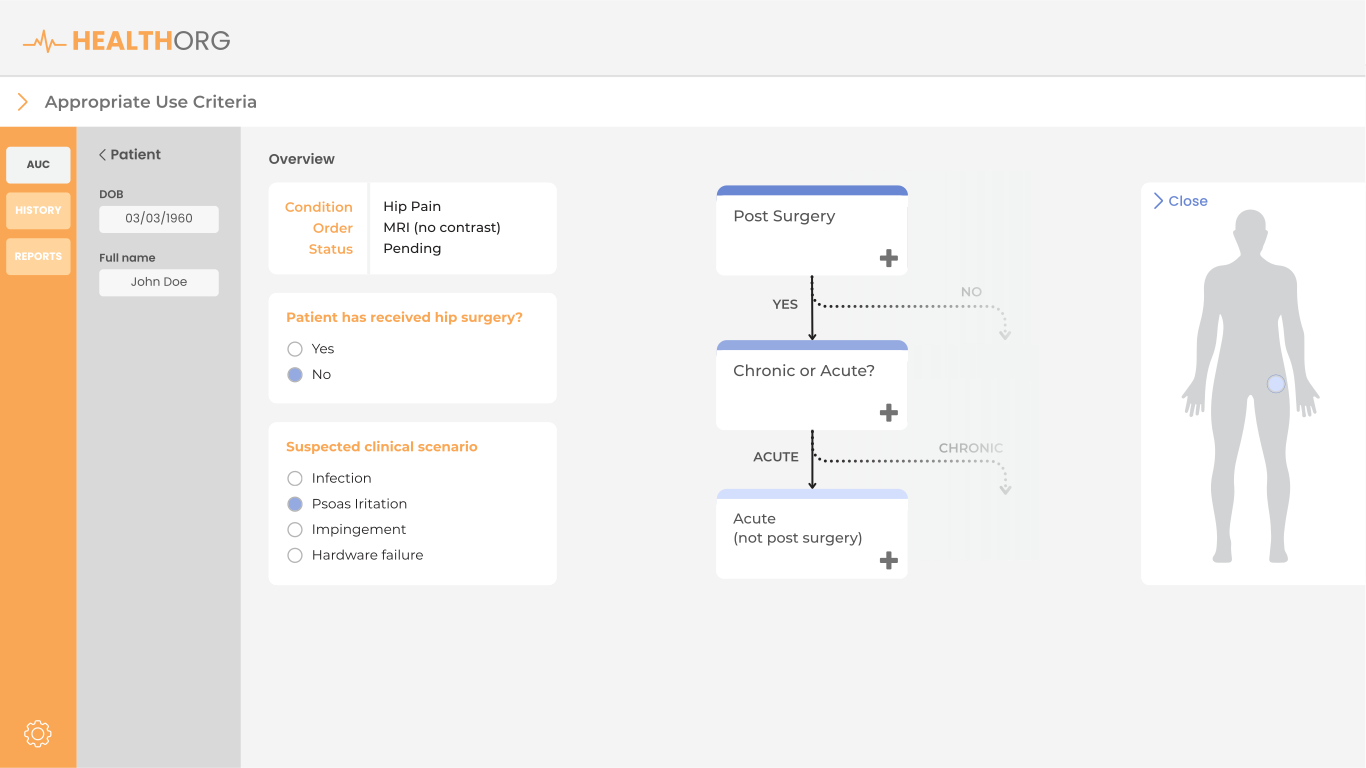
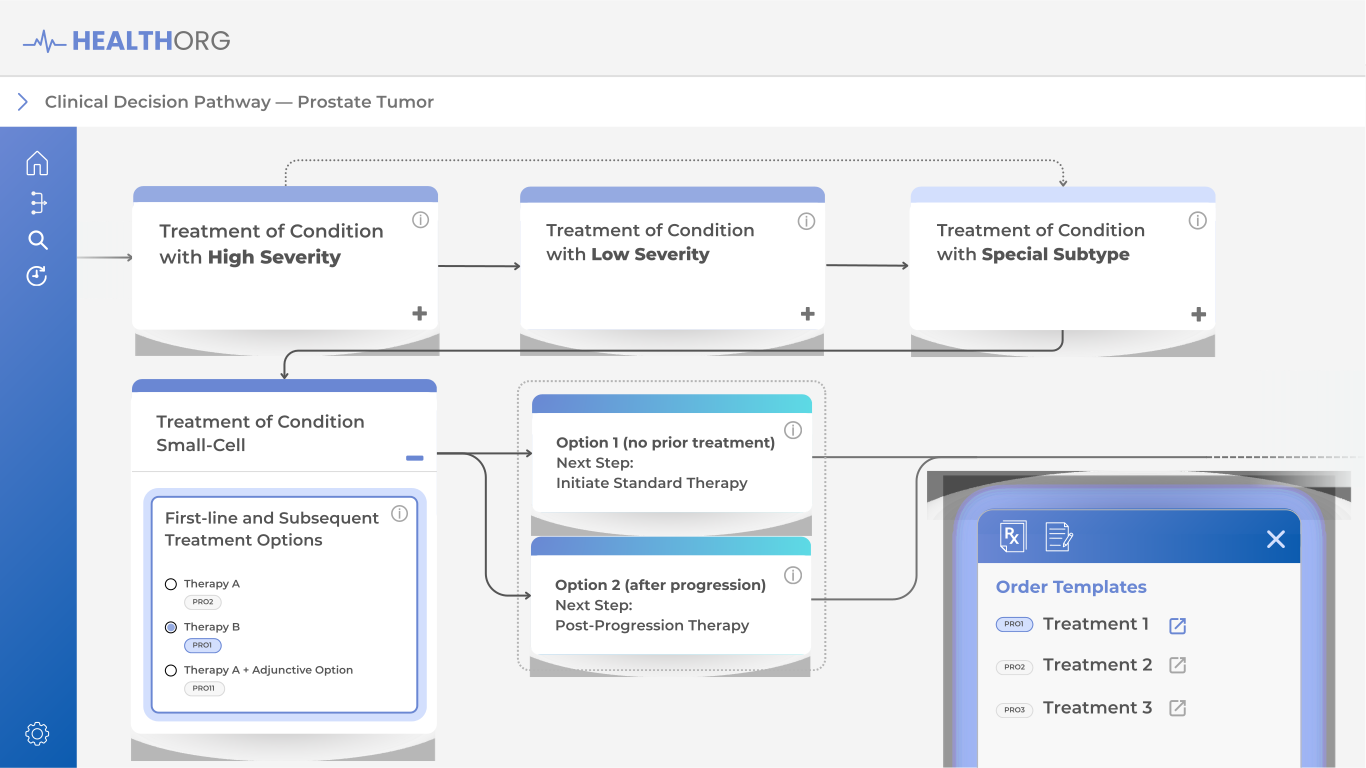
LogicNets is not just a design platform—it is a robust runtime environment for delivering clinical guidance applications at scale. Applications can be deployed as interactive, browser-based experiences or exposed as computable services through standard APIs, enabling seamless integration into EHRs and other enterprise systems. Built for security, performance, and scalability, LogicNets supports everything from targeted pilots to global deployments across geographically distributed environments.
Ready to Transform?
See how LogicNets transforms your clinical guidelines into interactive, workflow-integrated decision applications, and how AI can accelerate the process without compromising authority.
